
If you're a new mother watching your baby fuss at the breast or seeing low numbers on the pump, you're not alone. Milk supply worries are one of the most common concerns in the early weeks. The good news is that supply responds to the right triggers, and small, consistent changes can make a real difference. This guide walks through six techniques that help you boost breast milk naturally at home, from what you eat and drink to how you pump and which supplements to increase breast milk are worth considering.
What Does 'Boosting Breast Milk' Actually Mean?
Boosting breast milk means increasing the volume and consistency of milk your body produces between feedings. Supply is driven by demand: the more milk is removed from the breast, the more your body signals to make. Effective techniques work by increasing that demand signal, improving hormonal conditions, or supplying the nutrients lactation requires.
Your body runs on a supply-and-demand loop. Prolactin, the hormone responsible for milk production, rises every time milk is removed from the breast, whether by your baby or a pump. If removal slows down, prolactin drops and production follows. That's why so many moms notice supply dipping when they skip a session or go longer between feeds.
Understanding this loop matters because it tells you exactly where to intervene. You can increase demand (feed or pump more often), improve the hormonal environment (reduce stress, get sleep), or support the body's nutritional needs (eat the right foods, consider targeted supplements).
None of these levers work overnight. Most mothers who make meaningful gains see results over 3 to 7 days of consistent effort. Set that expectation early, and you'll stay motivated instead of quitting after 24 hours.
Feed or Pump More Frequently
Increasing feeding or pumping sessions from 8 to 10 or more times per day is the single most direct way to raise milk supply. Each session sends a prolactin spike to the brain. More spikes mean a higher baseline production over 48 to 72 hours.
If you want to know how to increase milk supply when pumping, start here. Most lactation consultants recommend pumping or nursing at least 8 times in 24 hours. Moving to 10 or 12 sessions, including one session between 1 a.m. and 5 a.m. when prolactin peaks naturally, can accelerate gains noticeably.
Power pumping is another tool worth knowing. The method mimics cluster feeding: pump for 20 minutes, rest 10 minutes, pump 10 minutes, rest 10 minutes, then pump 10 more minutes. Do one cycle per day for 3 to 5 consecutive days. Many moms report a 10 to 20% increase in output.
Make sure your pump flange fits correctly. A flange that is too large or too small restricts milk flow and can bruise tissue. Most women need a flange diameter between 21 mm and 27 mm. If you're unsure, a certified lactation consultant (IBCLC) can measure you in under five minutes.
Also check pump suction. Hospital-grade double electric pumps typically generate 250 to 300 mmHg of suction. Consumer pumps vary widely. If your pump is more than two years old and output has dropped, the motor may be losing power.
Which Foods Increase Breast Milk?
Foods traditionally used to increase breast milk include oats, fenugreek seeds, fennel, garlic, leafy greens, and almonds. These are called galactagogues. Research on most is limited, but oats and fenugreek have the strongest anecdotal and preliminary evidence behind them.
Diet alone rarely fixes a supply problem, but it gives your body the raw materials it needs to make milk. Breast milk production burns roughly 500 extra calories per day. If you're under-eating, supply suffers first.
Oats are the most popular galactagogue food in the U.S. A bowl of steel-cut oats in the morning is a low-effort starting point. Fenugreek seeds, used in Indian and Middle Eastern cooking for centuries, are commonly eaten whole or brewed as tea. Many mothers notice a maple-syrup scent in sweat and urine, which signals the fenugreek is metabolizing.
Fruits to increase breast milk include papaya (particularly in Southeast Asian lactation traditions), apricots, and dates. Dates are calorie-dense and rich in prolactin-stimulating compounds. A handful of 3 to 4 Medjool dates per day is a simple addition.
Leafy greens like spinach, moringa, and brewer's yeast round out the list. Moringa (malunggay) has the most promising small-scale trial data of any food, showing a statistically significant increase in milk volume in a 2013 Philippine study. Aim for variety rather than fixating on one ingredient.
Hydration matters too. Breast milk is about 87% water. If you're wondering what to drink to increase breast milk, start with plain water. Target at least 2.5 liters per day. Herbal teas (fenugreek, fennel, blessed thistle) add mild galactagogue benefits on top.
Hydration and Rest: The Two Most Overlooked Factors
Dehydration reduces milk volume within hours. Even mild dehydration of 1 to 2% of body weight can suppress output. Sleep deprivation compounds this by elevating cortisol, which suppresses prolactin. Fixing these two factors costs nothing and produces results faster than almost any other intervention.
New mothers are chronically under-hydrated and under-slept. Both conditions directly suppress milk production, yet they're rarely the first thing addressed when supply drops.
Keep a 750 ml water bottle next to every nursing or pumping spot in your home. Drink a full glass before each session. This simple habit adds up to 1.5 to 2 liters of water per day without requiring you to think about it.
Sleep is harder to control with a newborn, obviously. But even one 90-minute block of uninterrupted sleep per day, taken during a partner's feeding shift or nap time, measurably reduces cortisol. Lower cortisol means higher prolactin. The math is simple, even if the logistics are not.
Stress management falls in the same category. Cortisol constricts the milk-ejection reflex, which is why many mothers feel their milk "not letting down" during stressful moments. Five minutes of slow breathing before a pump session, or a warm towel on the breast for 60 seconds, can trigger the oxytocin release that drives let-down.
How Supplements to Increase Breast Milk Can Help
Lactation supplements typically combine galactagogue herbs (fenugreek, blessed thistle, moringa) with key vitamins and minerals that support hormone balance and milk synthesis. A well-formulated supplement fills nutritional gaps quickly and works alongside feeding frequency and diet changes, not instead of them.
Food-based galactagogues take time to eat, prepare, and absorb. For many busy new mothers, a targeted supplement is the practical bridge between good intentions and consistent results.
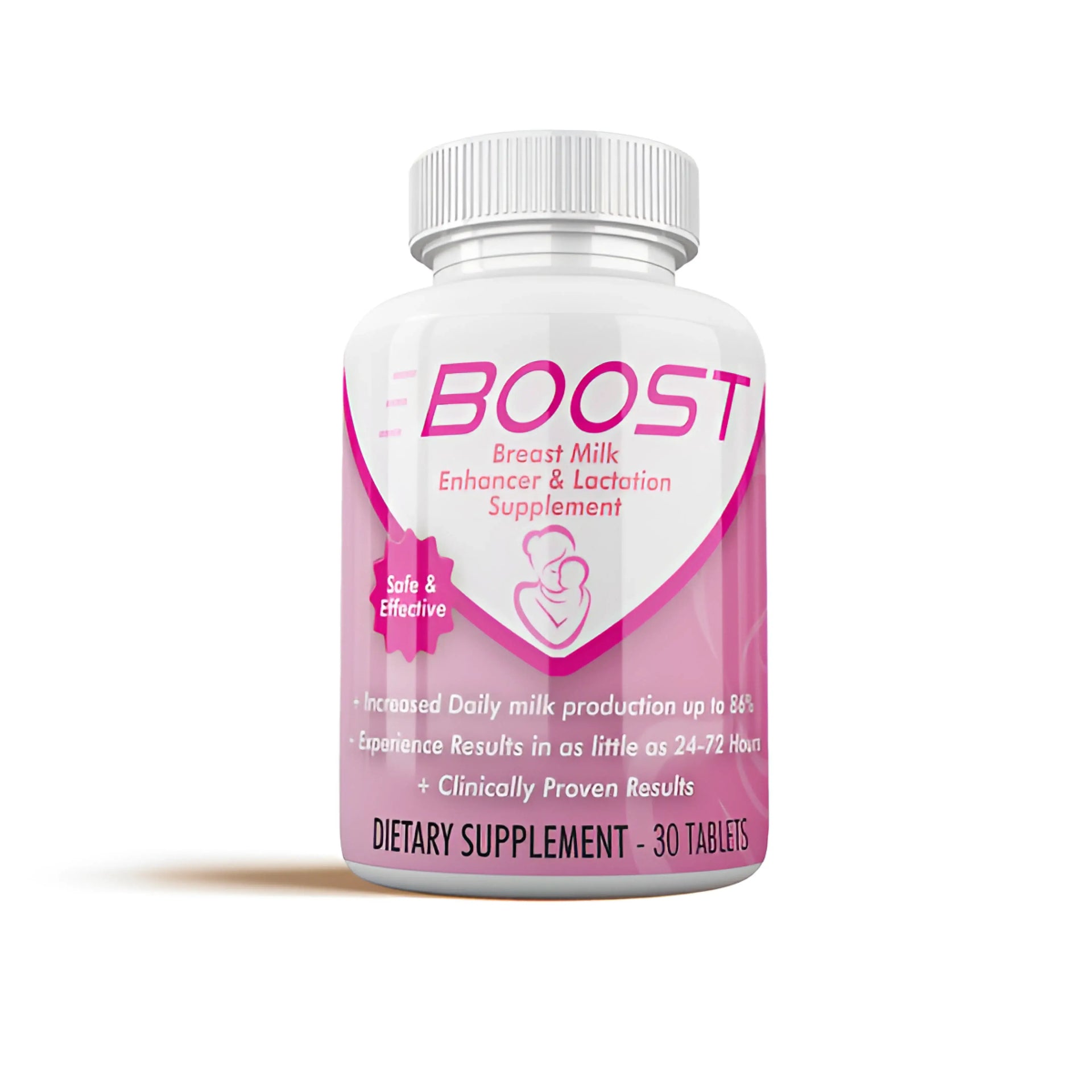
HealthBuy's Boost Breast Milk Enhancer is a scientifically formulated supplement designed to naturally increase breast milk production by up to 40%. It combines the evidence-backed galactagogue herbs with essential nutrients that many postpartum mothers are deficient in, including iron, iodine, and vitamin D. Rather than relying on a single ingredient, the formula addresses multiple points in the lactation pathway at once.
This matters because no single herb or nutrient controls milk supply. Production is a cascade involving diet, hormones, nerve signals, and glandular tissue. A supplement that covers the nutritional side of that cascade lets you focus your energy on the demand side (feeding and pumping frequency) without worrying about whether your diet is complete enough.
When starting any supplement, give it at least 5 to 7 days before judging results. Track output in a simple notes app: session time, volume, time of day. Numbers that trend upward over a week signal the supplement is working in combination with your other changes.
If you want to understand the full strategy behind milk-supply management, including when to call a lactation consultant and what realistic targets look like week by week, the complete guide to boosting breast milk supply covers it all in depth.
Can You Increase Breast Milk in One Day?
A same-day increase in milk volume is possible but modest. Power pumping, adding one or two extra nursing sessions, drinking an extra liter of water, and removing stress triggers can produce a noticeable uptick within 12 to 24 hours. Sustained gains require 3 to 7 days of consistent effort.
Searching 'how to increase breast milk instantly' is completely understandable, especially when your baby is hungry right now. Let's be honest about what's realistic.
Within a single day, you can boost output by 10 to 15% by stacking a few high-impact actions together. Nurse or pump every 2 hours. Add one power pump session in the early afternoon. Drink 2.5 liters of water. Eat a high-calorie, nutrient-dense meal with oats, eggs, and leafy greens. Apply a warm compress before each session.
Those changes work on the immediate let-down reflex and prolactin release. They won't build new glandular tissue in 24 hours, but they do maximize what your current supply can offer.
For mothers who need more volume than a single day can provide, the real answer is stacking these daily habits for a full week. Supply that seemed stuck at 2 oz per session can climb to 3 oz or more in 5 to 7 days when demand increases and nutrition catches up.
If you've done all of this for two weeks and seen no change, a structural issue (tongue tie, hormonal imbalance, insufficient glandular tissue) may be involved. Visiting an IBCLC rules those out and gives you a clear path forward.
Putting It All Together: A Simple Daily Routine
A practical daily routine combines nursing or pumping every 2 to 3 hours, drinking water before each session, eating at least one galactagogue-rich meal, taking a targeted lactation supplement, and protecting one 90-minute sleep block. Consistency across all five actions produces results faster than any single change alone.
Knowing the techniques is one thing. Doing them consistently while caring for a newborn is another. Here's a simple framework that pulls everything together.
Morning: Start with a large glass of water. Eat oats or eggs with leafy greens. Take your lactation supplement with breakfast. Nurse or pump within 30 minutes of waking.
Daytime: Aim for a session every 2 to 3 hours. Keep a water bottle in every room. If you pump at work, schedule your sessions as hard calendar blocks, not optional gaps.
Evening: Do a power pump session between 7 and 9 p.m. Eat a calorie-dense dinner. Stay close to your baby for skin-to-skin contact, which triggers oxytocin and supports let-down.
Night: Set an alarm for one 2 a.m. or 3 a.m. session, even if it's a short 10-minute pump. Prolactin is highest in the early hours. This single session, done consistently, can prevent the gradual supply slide that many moms experience after 8 weeks.
Track results weekly, not daily. Daily output fluctuates based on stress, hydration, and sleep. Week-over-week trends tell the real story. If week 2 numbers are higher than week 1, you're on the right path.
Frequently asked questions
How long does it take to boost breast milk supply?
Most mothers see a noticeable increase in milk volume within 3 to 7 days of consistently increasing feeding or pumping frequency, improving hydration, and adding galactagogue foods or supplements. Building a meaningful, sustained increase typically takes 1 to 2 weeks of daily effort.
What can I drink to increase breast milk quickly?
Plain water is the most effective drink for supporting milk production. Aim for 2.5 liters per day. Herbal teas made from fenugreek, fennel, or blessed thistle add mild galactagogue benefits. Avoid high-caffeine drinks above 200 mg per day, as excess caffeine can interfere with let-down.
Which fruits help increase breast milk?
Papaya, apricots, dates, and avocado are the fruits most associated with supporting lactation. Dates and papaya have the strongest traditional use. Apricots are rich in phytoestrogens, which may support prolactin activity. Eat these as part of a varied, calorie-sufficient diet rather than relying on any one fruit alone.
Are lactation supplements safe while breastfeeding?
Most lactation supplements containing fenugreek, blessed thistle, moringa, and key vitamins are considered safe for breastfeeding mothers when taken as directed. However, fenugreek should be avoided if you have a diabetes diagnosis or a peanut allergy. Always read the label and check with your healthcare provider if you take other medications.
How do I increase milk supply when pumping at work?
Schedule at least 3 pump sessions during your workday, roughly every 3 hours, and treat them as fixed appointments. Use a hospital-grade double pump if possible. Check that your flange fits correctly, drink water before each session, and look at a photo or video of your baby to trigger let-down. A consistent schedule matters more than session length.
Can stress really reduce breast milk supply?
Yes. High cortisol from stress constricts the oxytocin pathway responsible for milk let-down. You may have plenty of milk in the breast but find it won't release properly during a stressful session. Deep breathing, a warm compress on the breast for 60 seconds, or skin-to-skin contact before pumping can reset the let-down reflex.
Ready to try Boost Breast Milk Enhancer?
View pricing


