
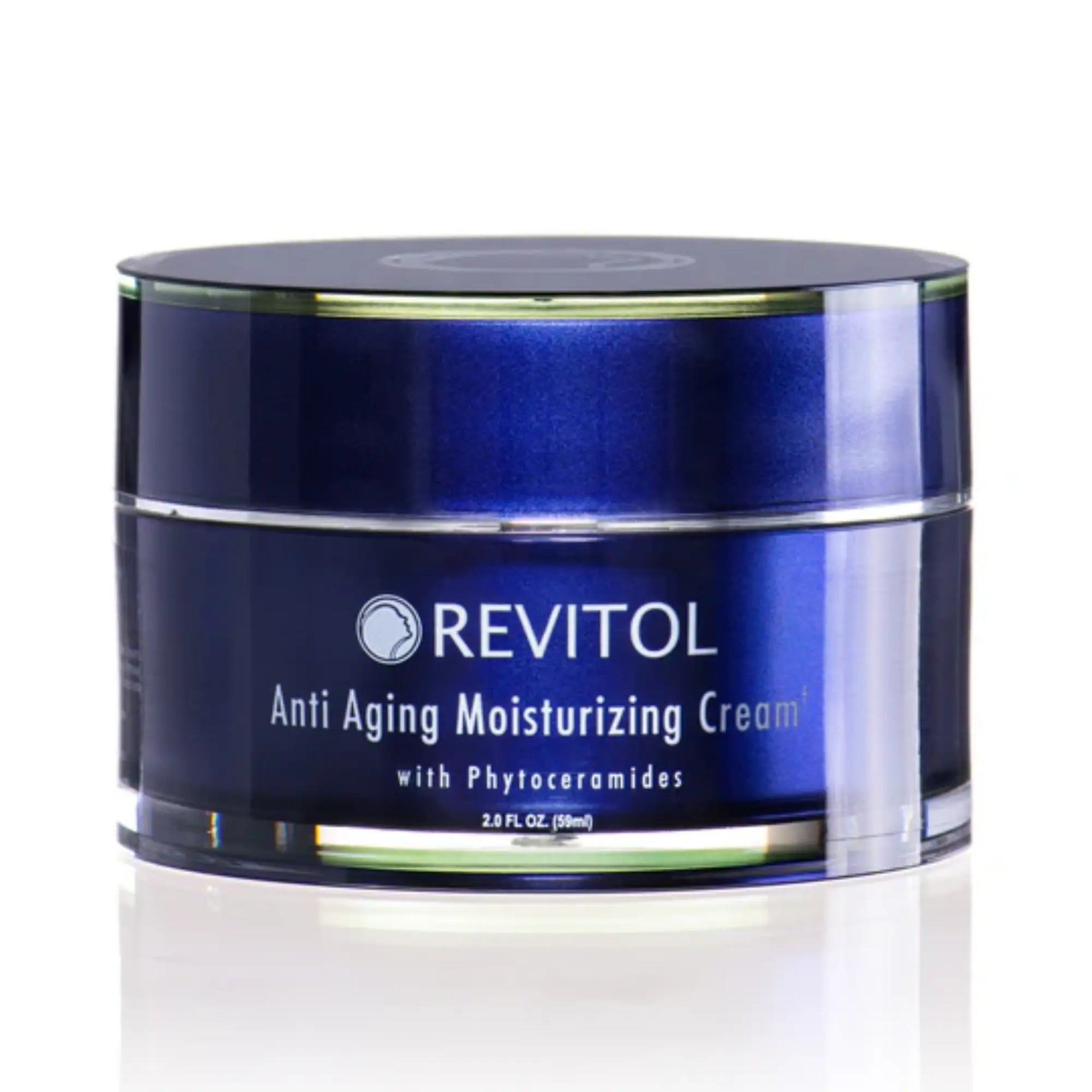
Fine lines around your eyes, a loss of firmness along the jaw, or that persistent dryness that no moisturizer seems to fix, these are the things that push most people toward a peptide anti-aging cream. Peptides are short chains of amino acids that signal your skin to behave younger: producing more collagen, retaining more moisture, and relaxing the micro-contractions that deepen expression lines over time. HealthBuy developed the Revitol Anti Aging Collagen and Peptide Formula for exactly this audience. It combines multiple clinically studied peptides with hyaluronic acid and shea butter in a single daily formula, so you are not managing a six-step routine to get results.
Contents
- What Peptides Actually Do in a Skin Cream
- Key Peptide Ingredients and What the Research Says
- How Peptide Creams Compare to Retinol and Vitamin C
- What Results to Realistically Expect
- How to Apply a Peptide Anti-Aging Cream Correctly
- Who Should (and Should Not) Use a Peptide Cream
- How to Read a Peptide Cream Label
- Comparison
- Frequently asked questions
- Sources
What Peptides Actually Do in a Skin Cream
Peptides in a skin cream are short amino acid chains that act as chemical messengers. They signal dermal fibroblasts to produce more collagen and elastin, two structural proteins that thin out with age. By restoring that signaling, a peptide anti-aging cream can measurably improve skin firmness, texture, and fine-line depth within weeks.
Your skin is constantly remodeling itself. Collagen fibers break down through UV exposure, pollution, and the simple passage of time, and your body replaces them more slowly after your mid-20s. By 40, collagen production can be roughly 1% lower each year, a slow drain that eventually shows up as wrinkles and sagging.
Peptides intervene at the biological level. When applied topically, certain peptide sequences are small enough to pass through the outer skin barrier and reach the dermis, where they bind to receptors on fibroblast cells. The fibroblasts read these signals as instructions to ramp up collagen and elastin synthesis.
This is not a surface-level fix. Retinol also stimulates collagen, but it does so through a different pathway (retinoic acid receptor activation) and comes with a real risk of irritation, peeling, and sun sensitivity. Peptides produce a gentler, more targeted signal with a much lower irritation profile, which makes them practical for daily use on sensitive skin.
Different peptide families work through different mechanisms. Signal peptides, like Matrixyl (palmitoyl pentapeptide-4), tell fibroblasts to build more collagen. Neurotransmitter-inhibiting peptides, like Argireline (acetyl hexapeptide-3), reduce muscle micro-contractions that carve expression lines deeper over time. Carrier peptides, like copper peptides, deliver trace minerals that support wound-healing and antioxidant defense in skin tissue. A well-formulated peptide cream stacks multiple families together so you get all three effects simultaneously.
Key Peptide Ingredients and What the Research Says
The most studied peptides for anti-aging skin care include: Matrixyl (palmitoyl pentapeptide-4), which boosts collagen I and III; Argireline (acetyl hexapeptide-3), which reduces expression-line depth; Syn-Ake, a synthetic tripeptide that mimics snake venom to relax facial muscles; and copper peptides, which support tissue repair and antioxidant activity.
Not all peptides perform equally. The ones with published clinical data are worth knowing by name, because they are what separate a genuinely effective formula from a product that just lists 'peptide blend' on the label.
Matrixyl (palmitoyl pentapeptide-4): One of the most cited peptides in cosmetic dermatology. A 2009 study published in the International Journal of Cosmetic Science found that Matrixyl stimulates the synthesis of collagen I, collagen III, and fibronectin in human skin explants. Participants using a cream containing 3% Matrixyl saw a measurable reduction in wrinkle depth after 2 months.
Argireline (acetyl hexapeptide-3): This peptide works by partially inhibiting the SNARE complex, the molecular mechanism that triggers muscle contraction. Less contraction around the eyes and forehead means expression lines form more slowly. A 2002 study by Blanes-Mira et al. showed a 17% reduction in wrinkle depth after 15 days of topical application.
Syn-Ake: A synthetic analog of a peptide found in temple viper venom, Syn-Ake targets the same nicotinic acetylcholine receptors that control muscle tension. In a 28-day study, subjects using 4% Syn-Ake saw up to a 52% reduction in the depth of expression wrinkles.
Copper peptides (GHK-Cu): These carrier peptides have been studied since the 1970s. They promote wound healing, stimulate collagen production, and act as antioxidants by chelating free copper ions that would otherwise catalyze oxidative damage.
Hyaluronic acid: Technically not a peptide, but critical in any anti-aging formula. A single gram of hyaluronic acid can hold up to 6 liters of water. It plumps fine lines from the inside out by drawing moisture into the dermis, making surface wrinkles appear shallower almost immediately.
Shea butter: Rich in oleic and linoleic acids, shea butter reinforces the skin's lipid barrier. A compromised barrier accelerates water loss, which makes fine lines look deeper. Shea restores that barrier and locks in the hydration that hyaluronic acid pulls in.
The Revitol formula stacks all six of these: Matrixyl, Argireline, Syn-Ake, copper peptides, hyaluronic acid, and shea butter. That combination addresses collagen signaling, muscle relaxation, barrier repair, and deep hydration in a single application.
How Peptide Creams Compare to Retinol and Vitamin C
Peptide creams, retinol, and vitamin C each target aging through different mechanisms. Peptides signal collagen production with minimal irritation. Retinol accelerates cell turnover but causes dryness and sun sensitivity. Vitamin C neutralizes free radicals and brightens tone but degrades quickly in sunlight. Peptides are the most versatile daily option for sensitive or reactive skin.
When someone is choosing between active ingredients for anti-aging skin care, the three names that come up most often are peptides, retinol, and vitamin C. They all work, but they work differently, and the right pick depends on your skin type, sensitivity, and goals.
Retinol is a vitamin A derivative that speeds up skin cell turnover and suppresses the enzymes (MMPs) that break down collagen. It has decades of clinical backing. The catch is the adjustment period: expect 4 to 8 weeks of possible redness, peeling, and heightened sun sensitivity before your skin adapts. For people with rosacea, eczema, or generally reactive skin, retinol is often a non-starter.
Vitamin C (L-ascorbic acid) is a potent antioxidant that also inhibits melanin production, making it the go-to for uneven tone and sun spots. The challenge is stability. L-ascorbic acid oxidizes quickly when exposed to light and air, so product formulation and storage matter enormously. Poorly stored vitamin C serums can turn orange and become ineffective in weeks.
Peptides sidestep both problems. They do not cause an adjustment period, they are stable in most formulations, and they are compatible with virtually every other active. You can layer a peptide cream over a vitamin C serum or use it the same night as a mild retinol without conflict.
The one area where retinol still holds an edge is speed of visible cell turnover. If rapid surface renewal is the priority, a low-dose retinol (0.025% to 0.05%) used three nights a week can pair well with a daily peptide cream to get both benefits without the full irritation load of higher retinol concentrations.
For adults dealing specifically with crow's feet, laugh lines, or skin firmness, a multi-peptide formula covers more ground than a single-active approach.
What Results to Realistically Expect
Most people using a peptide anti-aging cream consistently see three stages of results: initial hydration and plumping within 3 to 7 days, measurable softening of fine lines by week 4 to 6, and improved skin firmness and texture between weeks 8 and 12. Expression wrinkles take the longest because they depend on cumulative muscle-relaxation effects.
One of the most common frustrations with skin care is starting a product with unrealistic expectations and quitting before it has time to work. Peptide creams follow a predictable timeline.
Days 3 to 7: The first thing most users notice is improved hydration. Hyaluronic acid and shea butter act fast. Skin feels softer and looks plumper. Surface fine lines that are mostly caused by dehydration, those shallow lines you see after a poor night's sleep, will appear visibly reduced in this window.
Weeks 4 to 6: This is where peptide signaling starts to show measurable results. The Matrixyl in a well-dosed formula will have stimulated a meaningful uptick in new collagen synthesis. Fine lines around the eyes and mouth start to soften. Skin texture feels smoother under your fingertips.
Weeks 8 to 12: The full picture becomes visible. Firmness along the jawline and cheeks improves as new collagen fibers mature and organize. Expression lines, the ones driven by repeated muscle movement, begin to lose depth as Argireline and Syn-Ake reduce the micro-contractions that carve them deeper.
What peptides will not do: they will not eliminate deep static wrinkles (the ones visible at rest on older skin) without professional in-office treatments. They will not alter bone structure or significantly lift severely lax skin. Managing expectations matters. What they will do is slow the progression of new lines and visibly improve the ones that are still in the fine-to-moderate range.
Consistency is the deciding variable. Using a peptide cream 4 days out of 7 will not produce the same result as daily use. Skin biology responds to sustained signaling, not intermittent doses.
How to Apply a Peptide Anti-Aging Cream Correctly
To get the most from a peptide anti-aging cream: cleanse first to clear dead cells and excess oil, apply any water-based serums before the cream, use 2 to 3 fingertip units for the full face and neck, press the cream gently rather than rubbing, and apply morning and night for consistent results. Never apply over active breakouts or damaged skin.
Application technique changes how much of the active ingredient actually reaches your dermis instead of sitting on the surface or rubbing off.
Step 1 - Cleanse thoroughly. A peptide cream applied over an oily or dirty surface has to compete with sebum and dead skin cells before it can absorb. Use a gentle, non-stripping cleanser. Harsh foaming cleansers raise skin pH and temporarily disrupt the barrier, which can reduce peptide absorption.
Step 2 - Apply water-based actives first. If you use a vitamin C serum or a hyaluronic acid serum, apply those on slightly damp skin before the peptide cream. The rule is thinnest to thickest consistency. A peptide cream is generally richer than a serum, so it goes on top.
Step 3 - Use the right amount. For the face alone, one to two fingertip units is usually enough. For the face and neck together (the neck is often the first area to show aging), use two to three units. Using more does not accelerate results; peptides work at the cellular level, not by saturation.
Step 4 - Press, do not drag. Dragging a cream across delicate skin around the eyes can actually contribute to line formation over years. Use your ring finger to press the product gently into the orbital bone area and along the crow's-feet zone.
Step 5 - Follow with SPF in the morning. Peptides do not cause photosensitivity the way retinol does, but UV exposure is the number one driver of collagen breakdown. No peptide cream can outpace daily sun damage. A mineral SPF 30 or higher, applied after the peptide cream has absorbed (about 60 seconds), protects everything you are building.
For best results, apply twice daily: once in the morning under SPF, once at night on clean skin. Nighttime application is particularly valuable because skin repair processes peak between 11 PM and 3 AM.
Who Should (and Should Not) Use a Peptide Cream
Peptide anti-aging creams suit most adults aged 25 and older, including those with sensitive, dry, combination, or mature skin. They are one of the few anti-aging actives compatible with rosacea-prone skin. Peptide creams are not recommended as a substitute for dermatologist-prescribed treatments for severe acne, eczema flares, or infected skin conditions.
The broad compatibility of peptides is one of their biggest practical advantages. Here is a clear breakdown of who typically benefits and who should proceed with caution.
Good candidates:
- Adults 25 to 35 who want to start preventive collagen support before visible aging sets in.
- Adults 35 to 55 dealing with fine lines, crow's feet, laugh lines, or early firmness loss.
- People with dry or dehydrated skin who need actives paired with genuine moisture support (shea butter and hyaluronic acid fill that role).
- Those with sensitive or reactive skin who cannot tolerate retinol or strong chemical exfoliants.
- Rosacea sufferers who need anti-aging benefits without the risk of a flare.
- Individuals who already use retinol and want to add a complementary formula on alternating nights.
Use with caution or consult a dermatologist first:
- People with an active eczema flare or broken skin barrier. Applying any cream to compromised skin can trigger stinging or push ingredients past their intended absorption depth.
- Anyone with a known allergy to any listed ingredient, particularly shea butter (a tree nut derivative).
- Those on prescription topical medications. Some actives interact with prescription retinoids or antibiotics. A quick check with your prescriber takes 5 minutes and prevents potential conflicts.
Pregnancy and breastfeeding: Peptides themselves are generally considered low-risk, but formulas vary. The standard advice is to review the full ingredient list with your OB before introducing new skin care actives during pregnancy.
Age is not a barrier. There is no upper age limit for peptide use. Even skin in its 60s and 70s still responds to collagen-signaling peptides, though the results at that stage focus more on slowing further loss than on dramatic reversal.
How to Read a Peptide Cream Label
On a peptide cream label, look for peptides listed by their INCI (International Nomenclature of Cosmetic Ingredients) name in the top half of the ingredient list. Palmitoyl pentapeptide-4 (Matrixyl), acetyl hexapeptide-3 (Argireline), and GHK-Cu (copper peptide) should appear before the preservatives, which signals a meaningful concentration.
Most consumers scan a product label and see a wall of Latin-sounding names. Knowing where to look makes the difference between buying a formula with effective peptide concentrations and buying one where the peptides are more marketing than science.
Ingredient list order matters. Cosmetic ingredients are listed in descending order of concentration by weight (above 1%). Water (aqua) is almost always first. Look for your key peptides in the top 15 to 20 ingredients. If palmitoyl pentapeptide-4 or acetyl hexapeptide-3 appear near the very bottom, just above the fragrance and preservatives, the concentration is likely below 0.1% and the clinical benefit will be minimal.
Watch for the 1% rule. Ingredients present at 1% or less can be listed in any order. Manufacturers sometimes use this to shuffle impressive-sounding ingredients higher up the list without disclosing actual concentrations. When peptides appear after preservatives like phenoxyethanol or sodium benzoate, they are almost certainly in the sub-1% range.
Look for delivery systems. Peptides need a lipid carrier to penetrate the skin barrier. The 'palmitoyl' prefix in palmitoyl pentapeptide-4 signals exactly this: the peptide is bonded to a fatty acid to improve skin penetration. Peptides without a carrier tend to sit on the surface rather than reaching the dermis.
Stabilizers and pH. A good formula maintains a pH of 4.5 to 6.5 to match skin's natural acid mantle. If a brand publishes its pH (some do, in product descriptions or on request), that transparency is a positive signal.
Fragrance flags. Fragrance is one of the most common contact sensitizers in skin care. For a peptide cream targeting sensitive or aging skin, fragrance-free or 'unscented' is generally preferable to avoid unnecessary irritation that can counteract the soothing effects of the peptides themselves.
If a product lists its peptides by INCI name, shows them in the top third of the ingredient list, uses palmitylated forms for delivery, and omits unnecessary fragrance, those are strong signals that the formula was designed by someone who understands the science.
Comparison
| Ingredient / Active | Primary Mechanism | Irritation Risk | Visible Results Timeline | Sensitive Skin Safe |
|---|---|---|---|---|
| Peptide Blend (Matrixyl, Argireline, Syn-Ake) | Collagen signaling + muscle relaxation | Very Low | 4 to 12 weeks | Yes |
| Retinol (0.1% to 1%) | Cell turnover acceleration + MMP suppression | Moderate to High | 6 to 16 weeks (with adjustment period) | Often No |
| Vitamin C (L-ascorbic acid) | Antioxidant defense + melanin inhibition | Low to Moderate | 4 to 8 weeks | Sometimes |
| Copper Peptides (GHK-Cu) | Tissue repair + antioxidant support | Very Low | 6 to 10 weeks | Yes |
| Hyaluronic Acid | Surface hydration + line plumping | Very Low | 3 to 7 days | Yes |
Frequently asked questions
How long does a peptide anti-aging cream take to work?
Most people notice improved hydration and softer skin within the first 3 to 7 days. Fine line reduction typically becomes visible by weeks 4 to 6, and improvements in firmness and deeper expression lines are most apparent between weeks 8 and 12. Consistent daily use is the key variable.
Can you use a peptide cream with retinol?
Yes. Peptides and retinol are compatible and actually complement each other. A common approach is to use the peptide cream every morning (under SPF) and alternate with retinol at night, applying the peptide cream on the nights you skip retinol. This gives you the cell-turnover benefits of retinol without the full irritation load.
What peptides should I look for in an anti-aging cream?
The four most clinically supported peptides for anti-aging are: Matrixyl (palmitoyl pentapeptide-4) for collagen stimulation, Argireline (acetyl hexapeptide-3) for expression line reduction, Syn-Ake for muscle relaxation, and copper peptides (GHK-Cu) for tissue repair and antioxidant activity. Look for these names in the top portion of the ingredient list.
Is a peptide cream suitable for sensitive skin?
Yes. Peptides have one of the lowest irritation profiles of any anti-aging active. They do not cause the peeling or sun sensitivity associated with retinol and are generally well tolerated by people with rosacea, reactive skin, or skin that cannot handle chemical exfoliants. Always check for added fragrance, which is a more common irritant than the peptides themselves.
At what age should you start using a peptide anti-aging cream?
Dermatologists typically recommend starting collagen-support skin care in your mid-20s, when natural collagen production begins its gradual decline. Preventive use before lines are deeply set is more effective than trying to reverse advanced skin aging. That said, people in their 50s, 60s, and beyond still see measurable results from consistent peptide use.
Do peptide creams actually work, or is it just marketing?
Peptides with published clinical data, particularly Matrixyl and Argireline, have demonstrated measurable results in peer-reviewed studies. A 2002 study on Argireline showed a 17% reduction in wrinkle depth after 15 days. A Matrixyl study found significant collagen stimulation at 3% concentration. The results are real, but they depend on meaningful concentrations appearing in the top portion of the formula.
Should I apply a peptide cream before or after serum?
Apply serums first. The general rule is to go from the thinnest to the thickest consistency. A water-based serum (vitamin C or hyaluronic acid) goes on slightly damp skin first, followed by the peptide cream. In the morning, finish with SPF. At night, the peptide cream is typically the last step unless you use a facial oil.
Can peptide creams replace a moisturizer?
Many well-formulated peptide creams, especially those containing shea butter and hyaluronic acid, provide enough moisture for normal to dry skin types and can replace a separate moisturizer. People with very dry skin or those in low-humidity climates may still want a separate occlusive layer. Oily skin types often find a peptide cream provides sufficient hydration without added weight.
How do I know if a peptide cream has enough peptide concentration to work?
Check the ingredient list. Peptides should appear in the top 15 to 20 ingredients, before preservatives like phenoxyethanol. Look for the 'palmitoyl' prefix, which indicates a fatty acid carrier that improves skin penetration. If peptides appear at the very bottom of the list, the concentration is likely too low to produce clinical results.
What is the difference between collagen cream and peptide cream?
Collagen creams apply collagen molecules directly to the skin, but most collagen molecules are too large to penetrate the outer skin barrier. They primarily moisturize. Peptide creams work differently: the peptides are small enough to reach the dermis and signal your own fibroblasts to produce new collagen. This makes peptide creams more effective at addressing the underlying cause of aging skin, not just the surface symptoms.
Sources
- International Journal of Cosmetic Science (Blanes-Mira et al., 2002), Cited in the Key Peptide Ingredients section to support the clinical claim that Argireline (acetyl hexapeptide-3) reduced wrinkle depth by 17% after 15 days of topical application in a controlled study.
- PubMed / National Library of Medicine - GHK-Cu Copper Peptide Research (Pickart et al.), Cited in the Key Peptide Ingredients section to support the claim that copper peptides (GHK-Cu) promote wound healing, stimulate collagen production, and provide antioxidant activity by chelating free copper ions in skin tissue.
Ready to try Revitol Anti Aging Collogen and Peptide Formula?
View pricing


